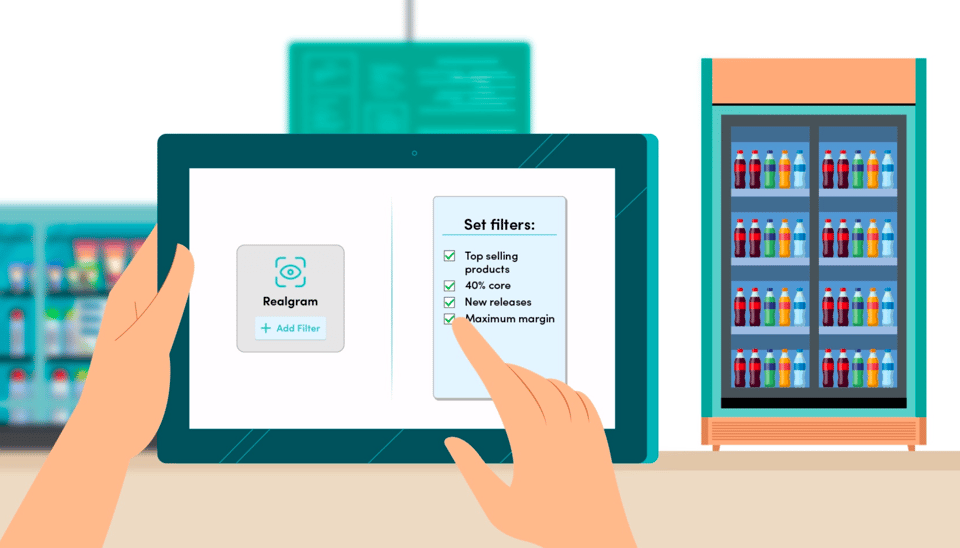

Every inch of shelf space matters (and we mean every inch!). But with growing product inventory lists, faster shifts in shopper behaviors, and leaner store teams, keeping shelves optimized across your entire retail network is harder than ever.
Traditional planograms can’t keep up, either. These static store layouts are designed weeks or months in advance, leaving your in-store teams reacting to changes rather than anticipating them. Every day, this friction makes it harder for your teams to adapt and adds stress to their workflows — in the long term, it means you’re losing out on sales and jeopardizing customer loyalty.
Still relying on static planograms? You’re holding your teams back.
AI planograms use real-time data to adapt shelf layouts faster and smarter, and at the store level. Instead of sending all stores the same static merchandising plan, you can tailor product placement and availability to match how shoppers buy in each location. Sales trends, inventory shifts, local preferences — all of it feeds into your planograms automatically.
The day-to-day impact? Less guesswork, more accuracy, and a better experience for your teams and your customers.
To make the most of AI planograms, it helps to understand what they are, how they work, and how platforms like Optimum Retailing make them easy to put into practice.
Key takeaways
- AI planograms use store-level product and shopper data to localize merchandising without increasing complexity.
- The real-time updates and compliance tools that power AI planograms make execution easy and accurate, for both HQ and store teams.
- Retailers can boost speed, consistency, and customer satisfaction at every store with less manual work.
- Within a self-optimizing store system, AI planograms balance human oversight with automated, accurate execution.
What is an AI planogram?
An AI planogram is a digitally generated layout of products on a fixture, created and optimized using AI rather than static templates or manual rules.
It updates automatically based on data like:
- Sales velocity
- Store layout and fixture types/dimensions
- Inventory availability
- Shopper behavior
- Local trends and events
Unlike the traditional planograms you build manually and distribute broadly, AI planograms use machine learning models to process data quickly and recommend the right product placement at the right time.
For example, imagine a fast-selling item that starts to outperform forecasts in just one U.S. region. If you wait to act on this insight, you may miss the opportunity to optimize performance. But an AI planogram can recommend giving the product more shelf space right away, applying the change only to stores in the region where that swap would drive sales.
The tool might go one step further and recommend moving the product to a totally different placement in a higher-traffic area of the store, capitalizing on its trendiness. The tool could even suggest additional nearby shelving optimizations, like organizing the fast-selling item around similar products that shoppers may be tempted to buy in bundles.
What used to take weeks can now happen in near real time. Your store teams can act quickly to keep shelves aligned with demand, without digging through outdated PDFs or pulling focus away from other important responsibilities. This means your customers find what they need and your stores unlock new revenue opportunities.
How AI planograms work in practice
AI planogramming isn’t just a single feature — it’s a system of connected tools and capabilities that work together to automate execution and improve decision-making.
The best part? The more you use AI planograms, the smarter they (and your stores) get. Over time, your stores become more responsive, more efficient, and more aligned with how people shop. In turn, your store teams grow in their confidence and agility, too.
Here’s a closer look at how the technology turns your data into action:
Localized merchandising at scale
Each store in your retail network gets a custom planogram based on:
- Local demand patterns and regional preferences
- Store size and layout, fixture type, and other physical constraints
For example, a suburban store location with strong family traffic might receive a product assortment and visual guide that prioritize bulk items, while a city store leans into plans built around impulse buys. Each store prioritizes consistency and customization, which means you maintain brand standards while still tailoring strategy to individual markets.
Real-time data integration
POS data, inventory levels, and forecasts all update your planograms in real time. Underperforming products? Overstocked items? The system automatically recommends changes before issues get worse. This way each store aligns with what shoppers are buying now and what inventory needs to turn over soonest, rather than what was predicted weeks earlier.
Automated compliance checks
Once plans are in place, execution is confirmed automatically through:
- Photo-based verification: Store teams capture images that image recognition models compare against the intended layout
- RFID verification: A real-time passive monitoring system tracks products via RFID tags, comparing in-store positioning at the shelf and fixture level to approved planograms
This step offers HQ visibility into what's actually happening on the floor — no manual audits required.
Continuous optimization
AI planograms learn from what works and offer intelligence around what doesn’t. With each new data cycle, the system fine-tunes layouts and product placement for better results. You get smarter recommendations for each store with less effort.
Strategic benefits for retailers
AI planograms do more than organize products. They make your entire retail operation faster, smarter, and more efficient, helping turn your visual merchandising strategy into a reliable growth driver.
Faster time-to-shelf
You can act immediately when trends emerge. For instance, when a product picks up in popularity, you can adjust shelves quickly so stores meet demand and drive sales while interest is high. If a drink goes viral due to a new social media challenge or popular influencer, instead of waiting weeks for planogram updates, AI recommends changes right away.
Store teams can act fast to ensure products are in the right place at the right time, and also avoid spending unnecessary time helping shoppers track down trendy inventory.
Higher merchandising compliance
AI automates validation so you don’t have to rely on manual checks or self-reporting alone. RFID and photo-based validation confirm layouts without adding extra work, an ideal solution for both HQ teams that need to monitor execution and performance in real time, as well as store teams that want to stay focused on other work.
Stronger customer experiences
Shoppers find what they want easily. Assortments feel relevant, layouts stay clean and consistent, and the overall in-store shopping experience is more enjoyable. These small wins help build loyalty over time.
More time for high-impact work
When you automate the routine tasks that help stores function every day, your associates can spend less time interpreting PDFs and adjusting shelves manually. That frees them up to focus on what counts: engaging customers and growing sales.
What you need for successful AI planogramming
Before diving in with your own AI planograms, first double check you have the right foundations in place. Driving value and scaling efforts with an AI-powered merchandising strategy should start by asking yourself these questions:
- Do we have access to store-level data?
Even if your store data is messy or siloed, you can still activate it. Platforms like Optimum Retailing help clean up and connect your existing data so it can start to inform your planogram decision-making. - Are we still using static merchandise plans?
Static PFDs make it difficult to keep layouts current as demand shifts, especially at the store level. Moving to dynamic, data-driven planograms is key to agile merchandising strategies that evolve over time. - Can we easily track planogram compliance?
If you can’t see what’s happening in each store, results will vary — no matter how spot on your merchandising strategy is. AI-powered tools with photo validation provide a clear view of what’s happening on the sales floor.
Why choose Optimum Retailing?
Optimum Retailing’s AI-powered merchandising and execution platform is built to handle the complexity of modern retail. You get access to:
- Store-specific planograms
- Dynamic, real-time updates
- Visual execution tools
- A team of experts ready to support
These capabilities help your store teams move faster, without sacrificing consistency. With Realgram AI, our AI planogram solution, your HQ can design layouts that reflect real store conditions, are easier for store teams to execute, and cut down on manual audits.
The results speak for themselves: Bell Canada cut its go-to-market timelines by 25% and print costs by 20% after moving to dynamic planning and execution workflows with Optimum Retailing.
Ready to reimagine your merchandising strategy?
AI planograms are the smart, scalable way to turn your shelf space into a competitive advantage — every inch of it. By blending automation with local insights and human support, you can optimize faster, sell more, and give your teams room to focus on what matters most.
Optimum Retailing offers the technology and expertise to put this approach into practice, helping shift your merchandising from static planning to continuous, data-driven optimization.
Curious how it could work in your stores? Contact us or request a demo to see AI planograms in action.
AI Planogram FAQs
What is an AI planogram?
An AI planogram is a shelf layout generated and optimized using artificial intelligence. It adjusts product placement based on data such as sales performance, inventory levels, and shopper behavior rather than fixed rules alone.
What are the benefits of using AI for planogramming?
AI planogramming improves speed, accuracy, and localization. Retailers gain the ability to adapt layouts quickly, ensure consistent execution, and align shelves with real demand patterns at the store level.
How do AI planograms use real-time inventory data?
Inventory feeds inform the system about stock availability and turnover rates. When levels change, AI can recommend adjustments that prevent overstocking or empty shelves in specific locations, which store teams can then approve or modify easily.
Are AI planograms customizable for each store location?
Yes. AI planograms are designed to be store-specific, accounting for local demand, layout constraints, and regional preferences while maintaining overall brand standards.